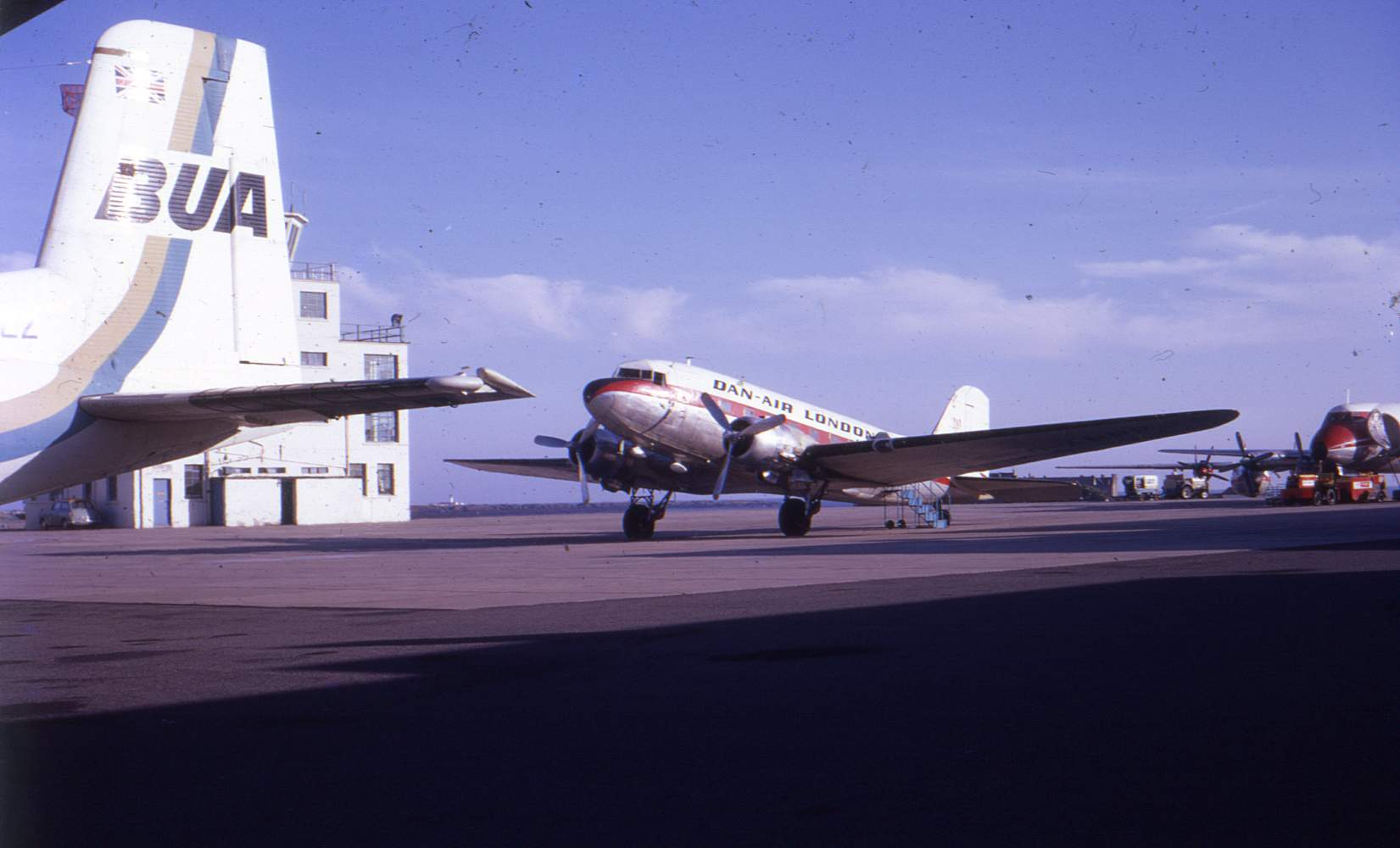

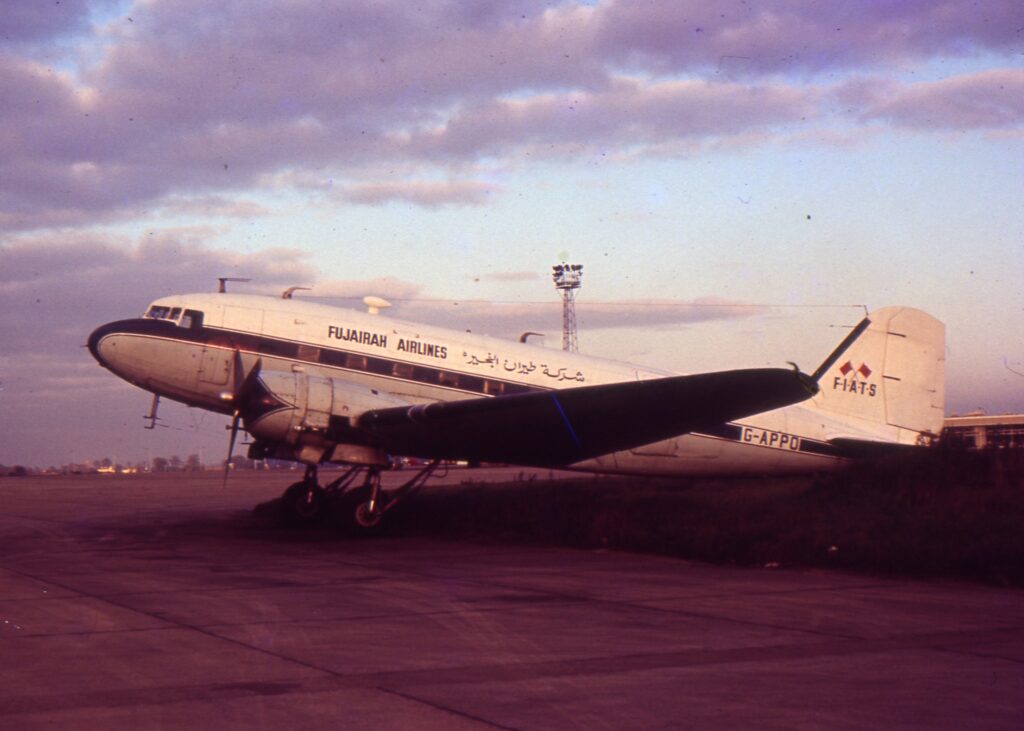
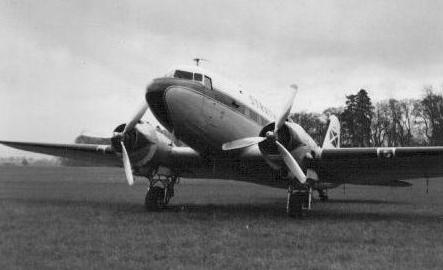
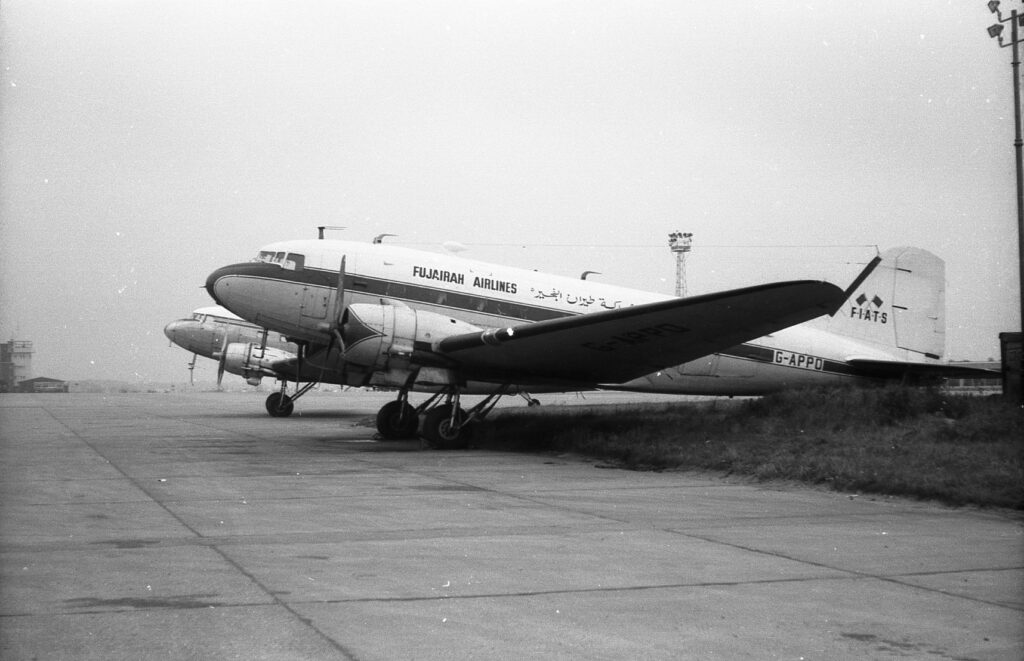
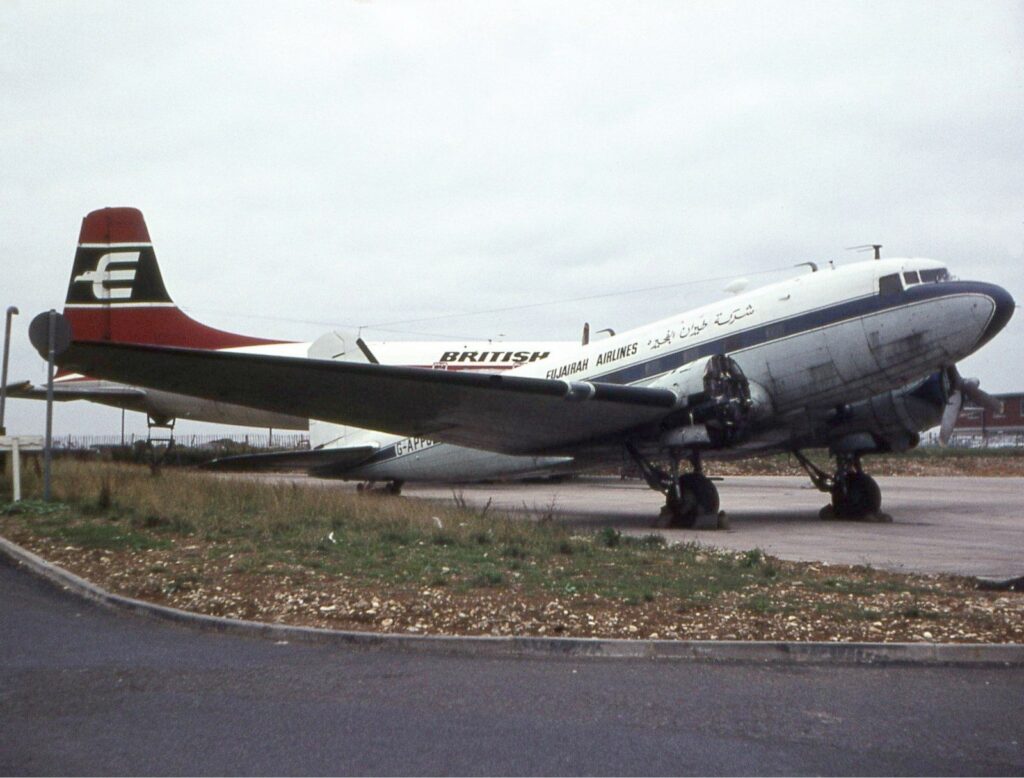
Snapshot 9 showed Ekco Avionics Anson G-AGPG on a sunny afternoon at Luton Airport, probably in Spring 1968. The Anson shared the apron outside the Autair hangars with two C-47s, G-ATBE and G-APPO. The latter is painted in the colours of Fujairah Airlines, a company which possibly never operated (1).
G-APPO had a history which differed from many British-registered Dakotas: she had never served with the RAF and didn’t follow the Scottish Aviation conversion route to BEA Pionair operations. Instead, the Long Beach-built 43-15987, c/n 20453, was delivered to the USAAF on June 2nd 1944 and assigned to the USAAF Ninth Air Force in Europe, arriving on July 30th 1944.
Post-war, she appeared in the fleet of Denmark’s DDL as OY-DDO, ‘Odd Viking’ delivered to Copenhagen on May 31st 1946 (2). It is very likely that, prior to joining DDL, the C-47 had returned to North America and been civilianised by Canadair at the old Noorduyn factory in cartierville, Montreal (3).
(1) Fujairah became one of the seven Trucial States in 1952. It had ties to neighbouring Sharjah and Muscat and became part of the United Arab Emirates in 1971. Gulf Aviation had been formed in 1950 to replace RAF transport out of Sharjah and it linked key airports such as Doha, Dhahran, Dubai, Abu Dhabi, Sharjah and Bahrain. Fujairah had a couple of airstrips, probably created by the RAF, at Masafi and Fujairah City. Although it bordered on Sharjah, the country might well have considered setting-up a national airline and Autair would certainly have been a relevant company to approach. However, the background is far from certain and many contemporary observers wrote-off G-APPO’s titles as being for a movie shoot.
(2) DC-1/ DC-2/ DC-3: The First Seventy Years by Jennifer Gradidge, published by Air Britain.
(3) Canadair were a major player in converting military C-47s to airliners. At the end of WW2, Douglas wanted to focus on 4-engine airliners and the C-47 production line was immediately shut-down. Canadair’s President, Ben Franklin, spotted the market and approached Donald W.Douglas himself with an offer to virtually buy everything from the Oklahoma City plant. Douglas told Franklin that he could buy anything which was located in two areas of the factory. Franklin promptly dispatched two guys to Oklahoma City to move anything that they thought was useful into those two zones! Parts were then bought at a flat rate of $200/ ton and tooling at $40/ ton. Apparently, some 600 rail wagons of C-47 parts and plant were shipped to Montreal to complement large numbers of war surplus USAAF C-47s being bought cheaply from the US War Assets Corporation and flown to Quebec by Don McVicar’s World Wide Aviation.
After a couple of years with DDL, the C-47 crossed to Ireland to join Aer Lingus as EI-AFB on 12th November 1948. Aer Lingus had re-opened post-war European services with Dakotas which, during the summer of 1947, they decided to supplement with a fleet of seven Vikings. The Vickers airliners didn’t fit well with Aer Lingus’ operation and they were sold the following year. Three further Dakotas were therefore leased as from May 1948 and, when they were returned in the autumn, the three C-47s EI-AFA/B and C were purchased from Scandinavia. EI-AFB was named St. Brendan until 1954 when the name passed to a Viscount and ‘AFB became St.Cillian. Towards the end of her Aer Lingus career, ‘AFB may even have become St.Jarlathe although, in January 1958, the C-47 was sent to Eagle Aviation at Blackbushe for overhaul.
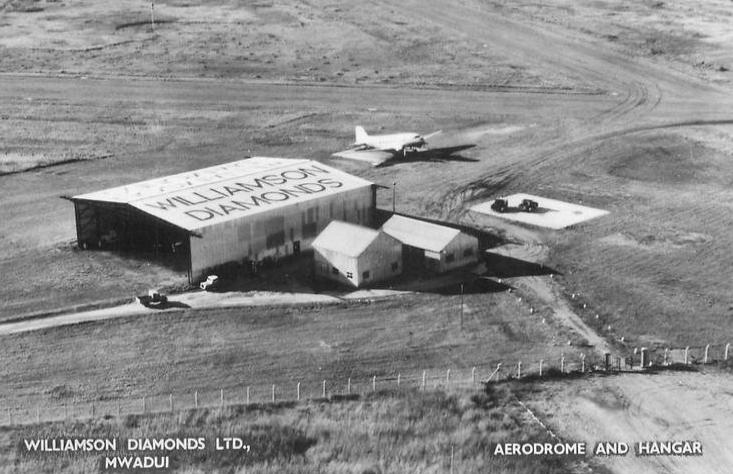
Eagle had passed through their Dakota-operating phase by 1958 but continued with maintenance and sales functions. EI-AFB was promptly re-registered VR-TBT on behalf of the Tanzanian company Williamson Diamond Mines. Delivered on 25th January 1958, still wearing the basic Aer Lingus green scheme, ‘TBT joined fellow Dakota VR-TBI at Williamson’s Mwadui strip. The Dakotas were used to fly freight and passengers between the mine strip and Nairobi in Kenya. ‘TBI had been bought from Wenela in South Africa, where it had been ZS-DHX, and continued to be used for transporting mine labour. It had been purchased in 1953 and continued with Wiliamson’s for many years. VR-TBT, however, returned to the UK in August 1958 where it was, again, received by Eagle Aviation. This raises the question as to whether the short stay in Africa had been for the duration of a lease. Tanzanian sources, however, say that the Dakota was owned by Williamsons before being sold to Lloyds of London underwriters C.E.Heath & Company to whom it was registered as G-APPO on 22nd October 1958 (4).
(4) Williamson Mine details from www.mwadui.com, registration information from the CAA G-INFO site.
C.E.Heath may have acted as sales agents for VR-TBT, but the C-47 was still at Blackbushe during January 1959. By early April, ‘PO had moved-on to BKS Engineering at Southend-on-Sea. During the early fifties, BKS had added four Dakotas to their fleet directly from the RAF disposal site at Kirkbride, Cumbria. The airline’s engineering facility enabled civilianisation to be achieved efficiently and economically and BKS Dakotas carried charter freight and passengers throughout Europe, the Middle East and as far south as Johannesburg. During 1953, scheduled routes and IT flights were inaugurated and four Vickers Vikings were purchased. These complemented the five-strong Dakota fleet. BKS began to introduce ex-BEA Ambassadors, with three in service by May 1958. This led to the departure of four Dakotas and all of the Vikings by January 1959. Strangely, G-APPO was only added in 1959, perhaps in recognition that they had overdone their fleet sales. Also, freight operations were best suited to the Dakotas and some of the runways at BKS destinations were more appropriate for the Dakotas than the newer equipment. A further C-47 was added in May 1960.
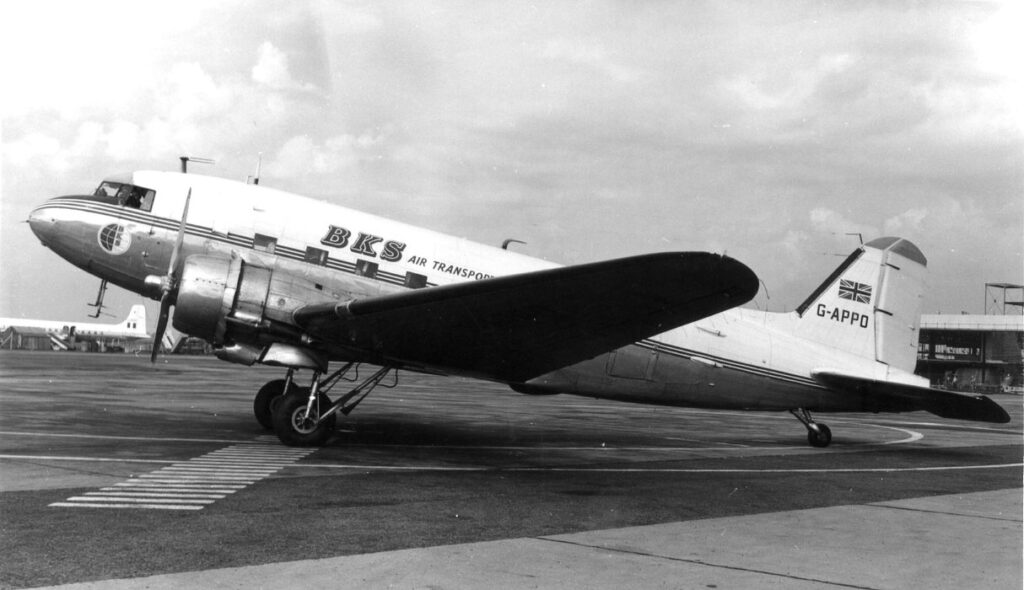
However, by autumn 1962, G-APPO was parked up at BKS’s Newcastle base owing to a lack of business. The Dakota returned to service for a charter to Skyways Coach Air over Christmas 1962, returning to BKS on 28th December. G-APPO was re-registered to BKS Air Transport Ltd of London on 10th July 1963. The Dakota was also involved in a twice-weekly freight shuttle between Newcastle and Heathrow and operated ad hoc passenger and freight flights. By the end of 1965, G-APPO was operating a number of regular freight charters on routes such as Southend to Antwerp but the last three Dakotas (G-APPO, G-AIWD and G-AMSH) didn’t appear to have much future with BKS.
In early May 1966, G-APPO flew to BKS’s Southend maintenance base for overhaul and repainting in the colours of Strathair. The new Scottish airline had its roots in Strathallan Air Services and was nominally based at the Auchterarder airstrip at Strathallan Castle in Perthshire, owned by the brothers William and David Roberts. Although initially an air taxi and charter concern, Strathair aspired to operate scheduled services and were awarded schedules which included Dundee, Edinburgh, Prestwick and Inverness. G-APPO was delivered from Southend to Edinburgh on May 4th and spent much of the summer involved in crew training and occasional local visits. A Dove was added in June and this aircraft was also used for skydiving from Auchterarder. G-APPO did visit the grass strip at Strathallan Castle but wasn’t used for any parachute training. It did venture south of the border to Newcastle on July 2nd and 22nd but little else transpired and the Dakota left the airline, possibly off lease, on 22nd October 1966.
G-APPO joined Autair at its Luton base during October 1966. As with BKS, its arrival at the airline seemed to be a bit late in the day: Autair had operated half a dozen C-47s between 1960 and 1966 but all had moved-on by autumn ’66. The airline did have a very complicated family tree with subsidiary companies all over the World, so it is possible that G-APPO was bought with a view to leasing overseas. Indeed, the old Dak appeared in Fujairah colours and a lease was reported to have been signed on 30th October 1967. However, there was no movement and, when this picture was taken in 1968, she was still parked at Luton. With no departure to the Gulf States, the engines were later removed and G-APPO was withdrawn from use on 17th February 1970. A sale to A.J.Walter Ltd was recorded on March 5th and the Dakota was removed to the parts dealer’s Horley, Surrey, later in the month.
In summary, it seems that G-APPO never really achieved her potential and often joined airlines as a stop-gap or as they were winding-down their DC-3 operations.
Sources, in addition to those credited above:
Flight International, Air Britain Digest.
Hits: 47