
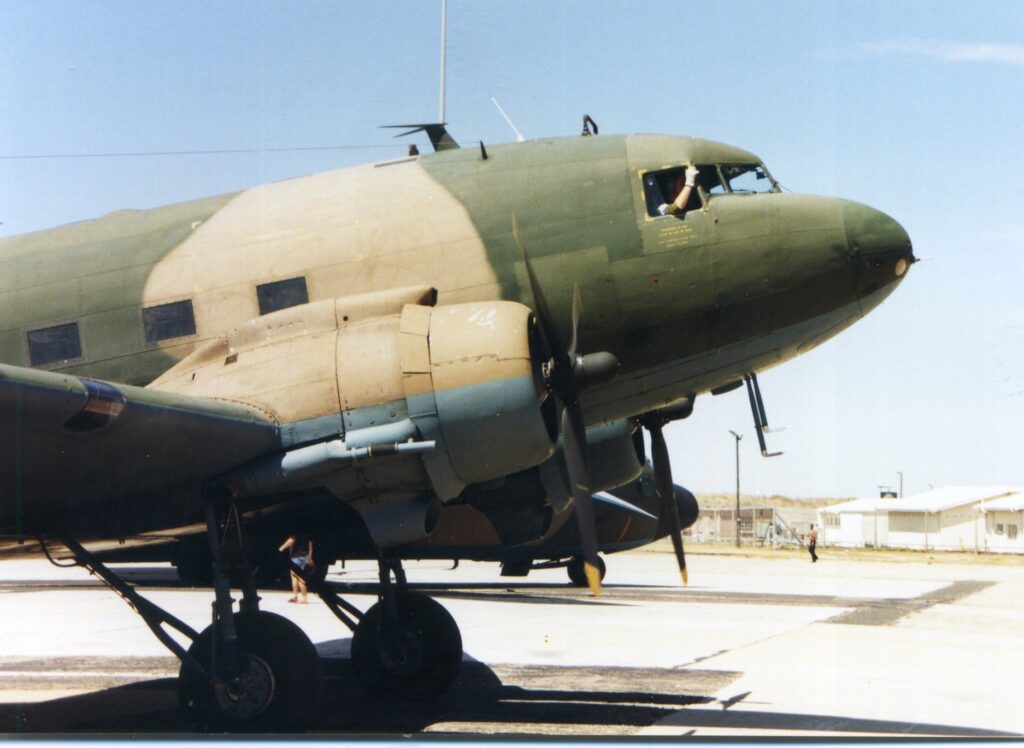
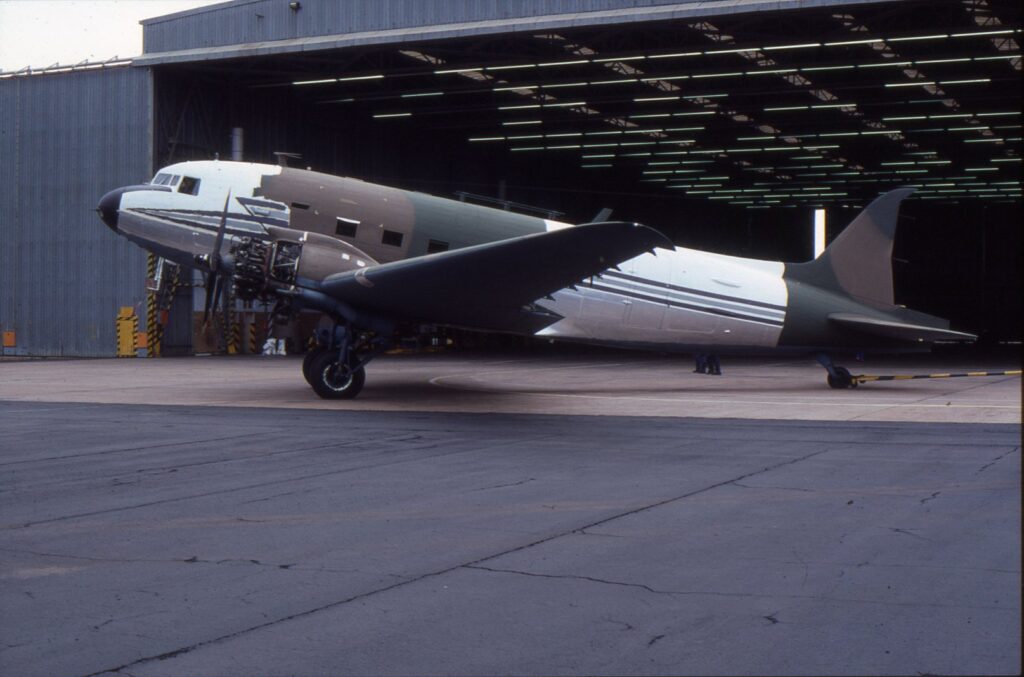
Snapshot 6 featured an SAAF Harvard at the Ysterplaat Air Show in 1995. This image is of another WW2 veteran at the 75th anniversary celebrations for the SAAF.
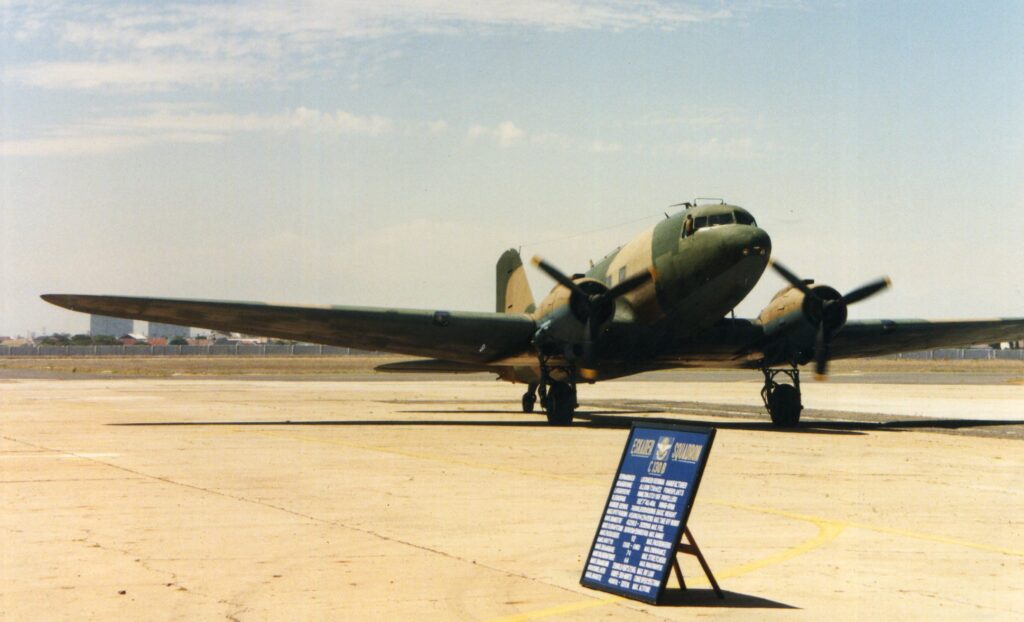
The C-47 Dakota served with the SAAF between WW2 and the late 1990s as a key transport, survey, target tug and maritime patrol aircraft. The full story merits a book of its own but the Dakota captured in these photos, 6832, encapsulates the history of the Dak in South African military service.
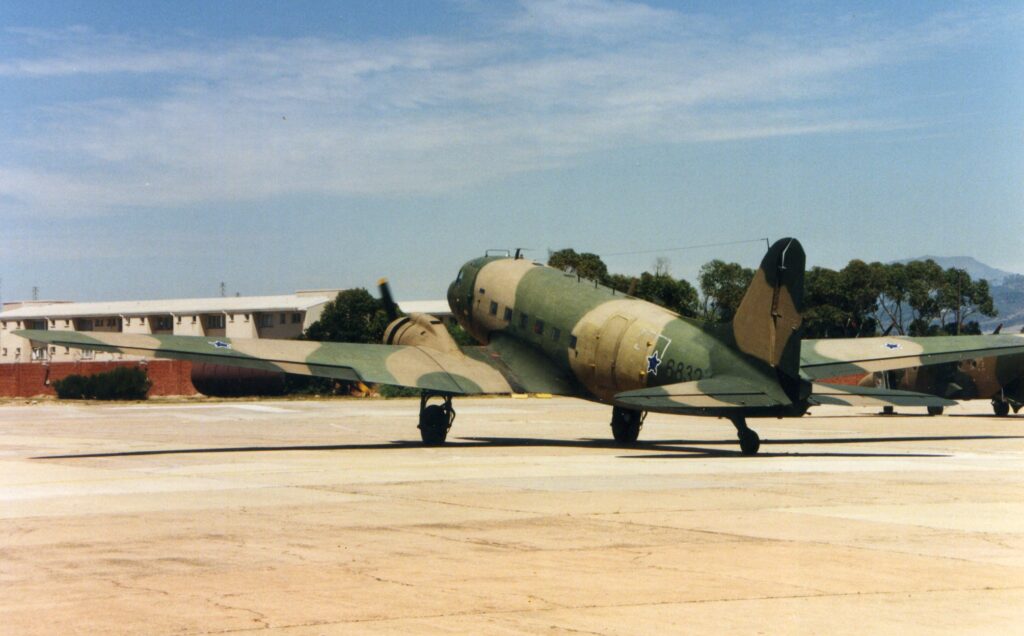
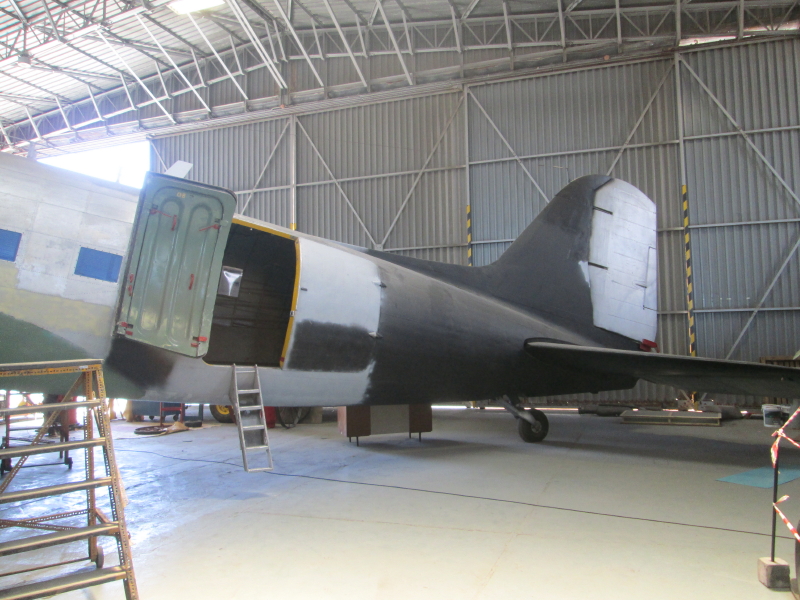
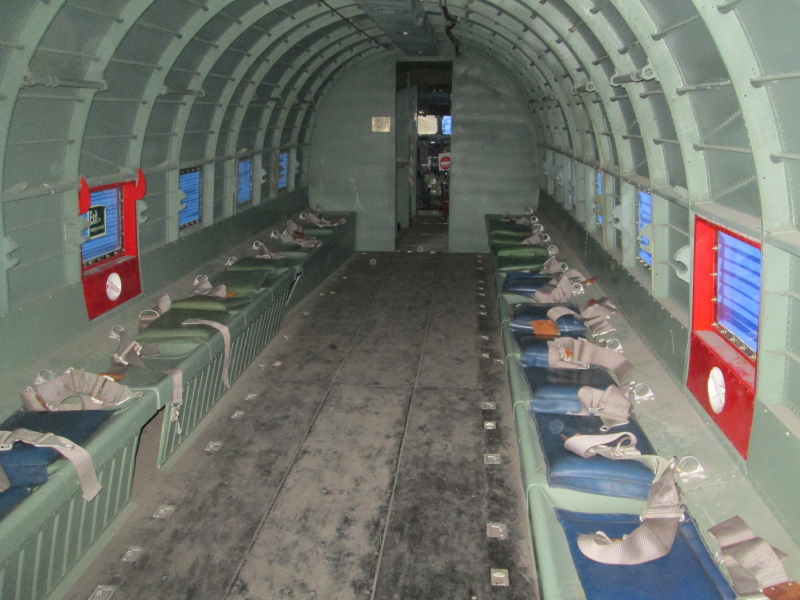
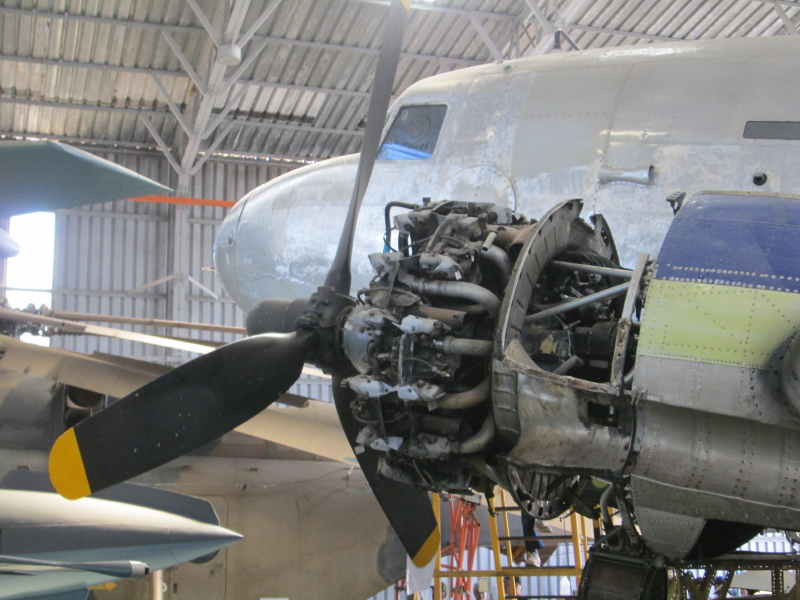
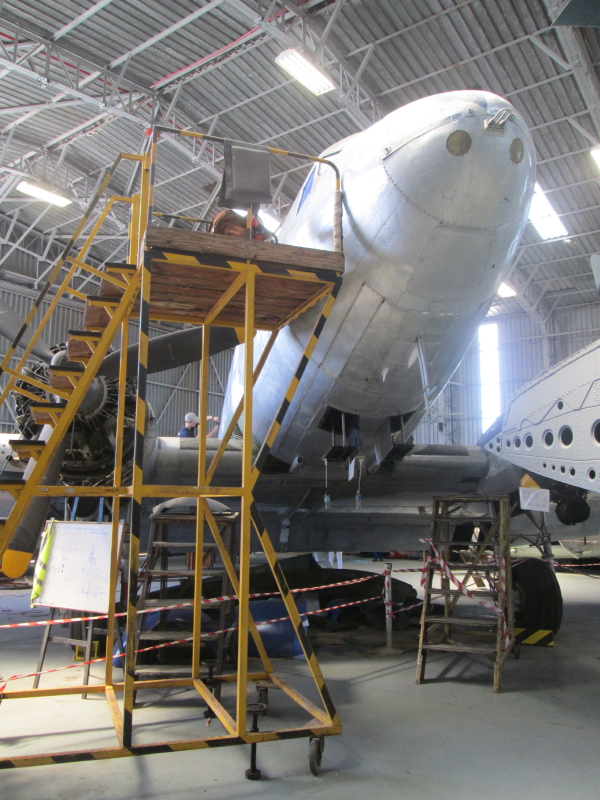
6832 was supplied to the RAF under Lend/ Lease as KG443, delivered to South Africa via Bermuda in April 1944 and given the second SAAF serial allocated to C-47s. Serving with #5 Transport Wing during the war years, 6832 moved to 28 Squadron SAAF in 1946, followed by 27 and 44 Squadrons and 25 Squadron between 1975 and 1979. Maritime reconnaissance duties with 35 Squadron, based at Ysterplaat, followed until retirement from active duty in 1992. The old Dak escaped a late-life conversion to AMI turboprop specification and retired to the SAAF Museum at Swartkop -apparently at the request of members of its 1952 crew. SAAF information maintains that 6832 made her last flight on March 3rd 1995 when she flew from Swartkop to the 35 Squadron facility at DF Malan, Cape Town International Airport. In fact, as the photos show, she certainly flew at the 75th Anniversary Show on the following day and parked-up at Ysterplaat following her display.
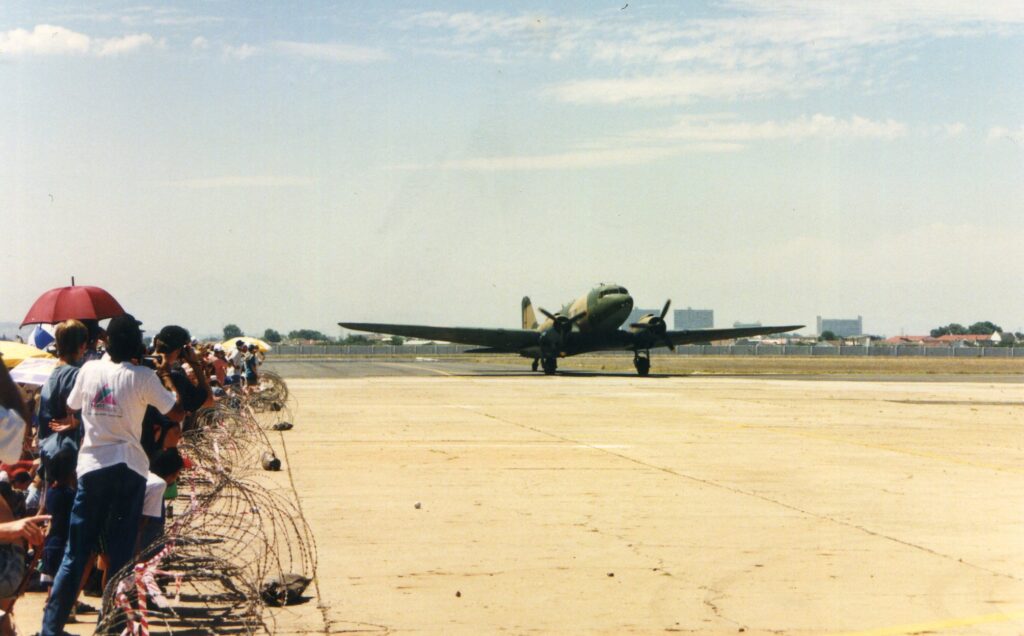
It seems likely that 6832 returned to DF Malan by air shortly afterwards and remained there for several years. Subsequently transferred to the Museum at Ysterplaat by road, restoration began in 2003 and, when I visited in 2025, was ongoing.
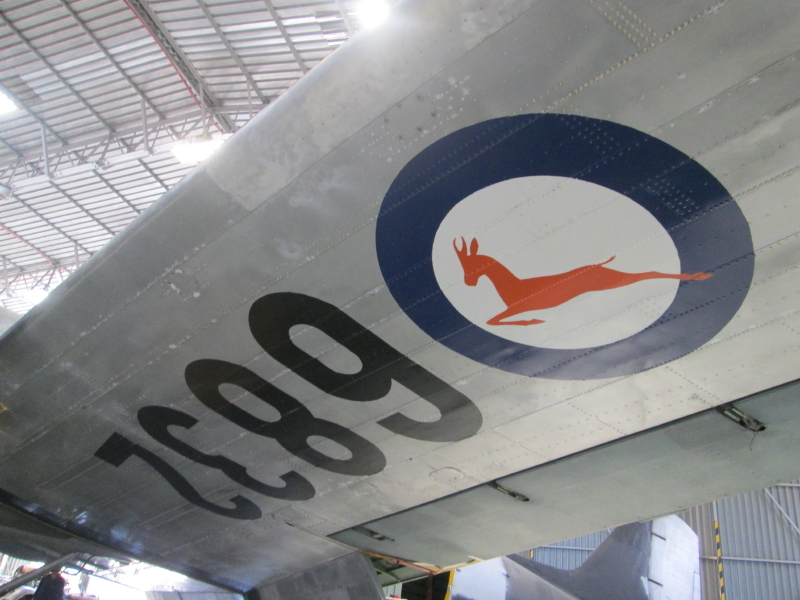
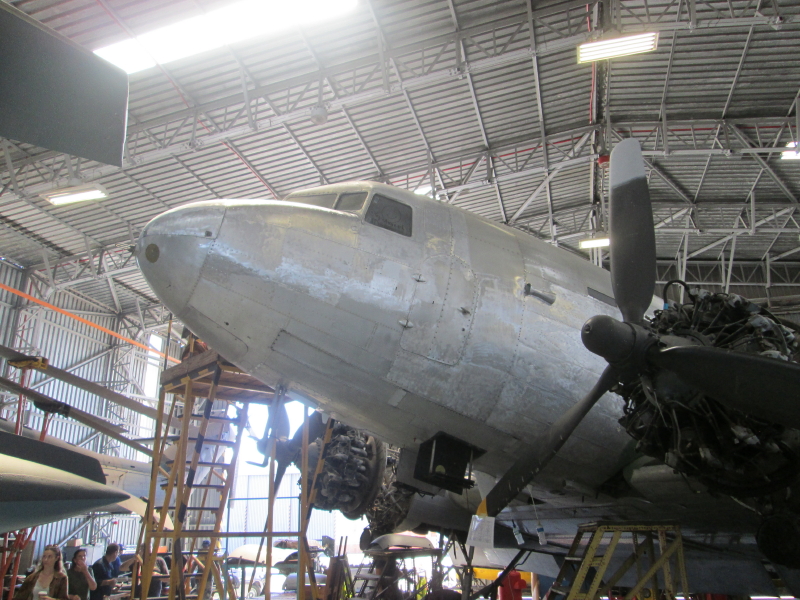
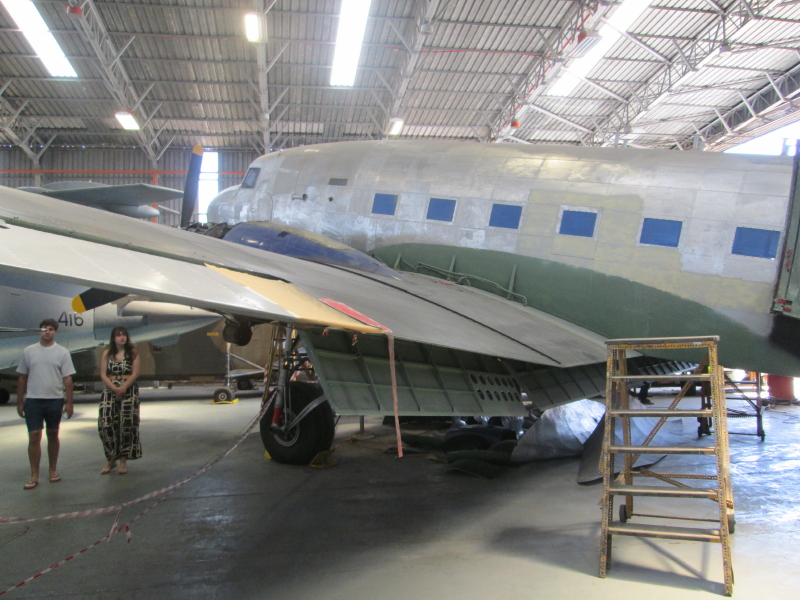
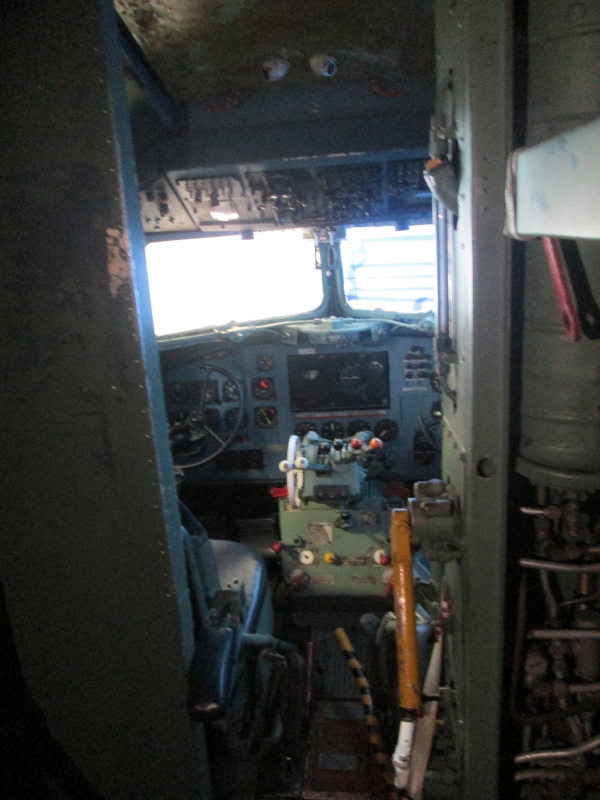
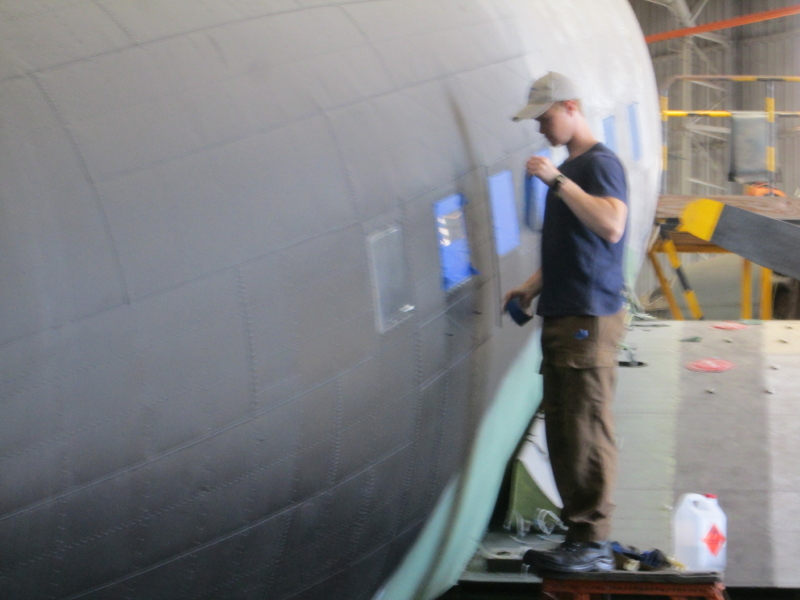
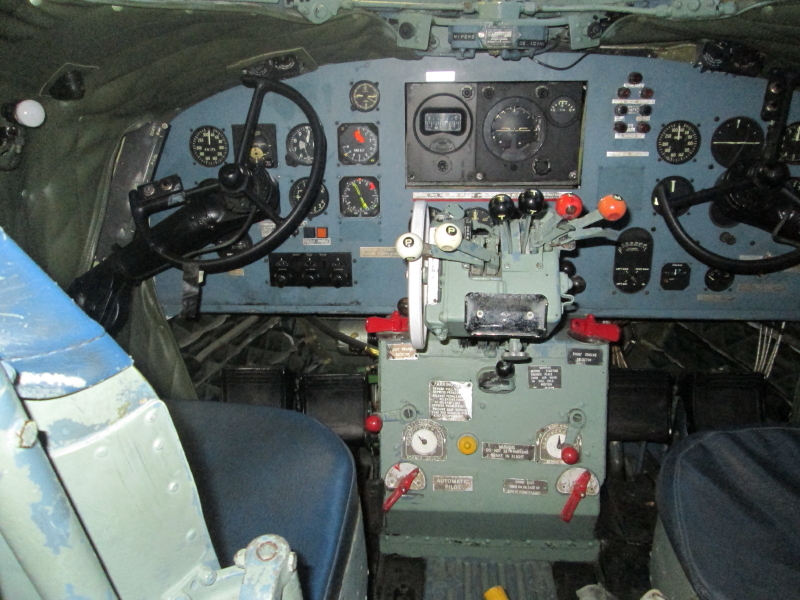
Dakotas in SAAF service fall into clear blocks of serial numbers. The first aircraft to reach South Africa were supplied under a Lend/ Lease contract between the USA and the RAF and each Dakota carried an RAF serial. Deliveries began in April 1944 and ferry flights across the Atlantic southern route via West Africa proceeded at a steady rate of 2-4 per month. Upon arrival in South Africa, each Dakota was given an SAAF serial number and the full, contiguous block of (58) aircraft numbered from 6831 to 6858. Assigned to #5 Transport Wing SAAF, one of the new Dakota fleet’s primary duties was to transfer South African troops between their home bases and North Africa where they were fighting alongside the British Eighth Army. Additionally, the SAAF was given further transport responsibilities in the Mediterranean theatre and 28 Squadron SAAF was formed at Almaza, Egypt, in July 1943 with five Dakotas and a selection of Wellingtons and Ansons. The Dakotas had already been in service and carried RAF serials. Initially operating from Castel Benito in Libya, the Squadron moved to Maison Blanche, Algiers, in June 1944. 28 also operated a number of detached flights as the war in the western desert ebbed and flowed. These included Rabat at Ras-el-Mar in Morocco, Oudna in Tunisia, Pachino in Sicily and Bari in Italy. By the time the Squadron returned to South Africa in October 1945, they were operating 26 Dakotas.
A second squadron, #44 SAAF, was equipped in the same way as from March 1944 and their aircraft were employed ferrying personnel and freight from points as far west as Takoradi in Ghana, as far east at Karachi and as far south as Sudan and East Africa. Four aircraft were also detached to assist 267 Squadron RAF in supporting the partisan forces in the Balkans. By the end of 1945, 44 Squadron were operating flights from Cairo West in Egypt and Bari in Italy alongside 267 and 512 Squadrons RAF. 44 Squadron disbanded at Bari in December 1945 and, although it subsequently reformed in late 1953, none of their Dakotas returned to South Africa.
Inevitably, some of the aircraft failed to survive the war owing to accidents and, when their work was complete in North Africa, some Dakotas remained behind. Fifty-one individual Dakotas flew for 28 Squadron during the war and, of these, seven were lost in accidents and four were struck-off-charge. At least twelve of the Squadron’s aircraft moved on to new postings with ACSEA in south-east Asia while four were demobbed or broken-up at the Foreign Liquidation Commission’s (FLC) Payne Field facility in Egypt. Three moved to other RAF squadrons (such as 512 who shared operations from Bari aerodrome) or Maintenance Units. This left 21 ex-58 Squadron Dakotas heading home to South Africa along with another five aircraft which are not listed as being flown by either 28 or 44 squadrons (1). The total fleet of 26 aircraft received SAAF serials in the block 6859 to 6884.
(1) Information largely from Air Britain’s all-embracing history of the DC-3 written by JMG Gradidge and Jennifer Gradidge.
As mentioned, none of the 30 Dakotas which flew exclusively for 44 Squadron (as opposed to a few which flew with both 28 and 44 squadrons) returned to South Africa: three moved on to service in India, three to 1330 Multi-engine Conversion Unit in Egypt, eight to other RAF squadrons or air arms. Six had crashed during war time operations and ten were sent to the FLC disposal site at Payne Field, Egypt.
POST WAR DISPOSALS
The end of the War led to rationalisation of the SAAF and #5 Transport Wing was disbanded, although 28 Squadron remained active with fifteen Dakotas. Many of the remainder were stored at 15 Air Depot and some were ear-marked for demobilisation to commercial concerns or to South African Airways. While large numbers of relatively obsolete aircraft such as Ansons and Oxfords were sent for disposal at little more than scrap value, the Dakotas remained valuable commodities for passenger and freight operators. Seven aircraft were transferred to South African Airways – although some later returned to military service.
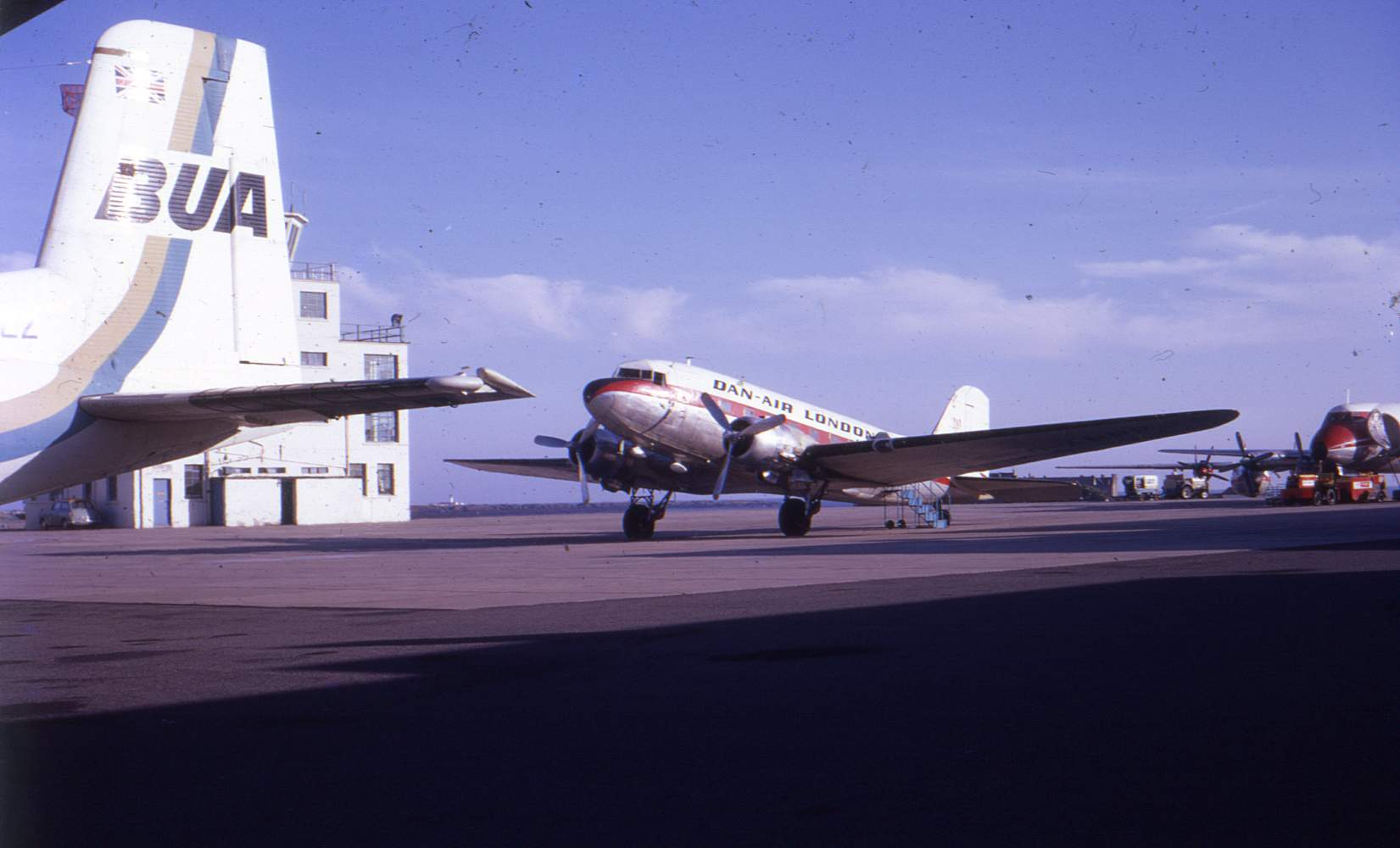
Aviation history often reflects contemporary social and political conditions and the story of SAAF’s fleet is certainly a good example of that. At the end of WW2, huge numbers of people were on the move, often seeking to escape war-torn Europe for new opportunities in Australia, Africa and the Americas. This created a market for civil aviation which was eagerly developed by ex-service personnel with entrepreneurial spirits, flying skills and a bit of demob money. While South Africa spawned its share of free-booting aviators flying ex-service Dakotas between Europe and Johannesburg, many of the initial operators were bank-rolled by larger commercial and transport organisations. Suidair, for example, was started in 1946 as an offshoot of President Motors and acquired three ex-SAAF Dakotas (6830, 6831 an 6833 – missing out on the subject of our photos, the venerable 6832), two ex-RAF machines from Egypt and an ex-US registered example. 6830 never took up its civil identity, ZS-BYI, and moved on to Tropic Airways as ZS-DFB. Operating all over Africa, Suidair didn’t last very long but achieved a certain notoriety when one of its fleet, ZS-BJZ, was ditched in a shallow lake in the Congo. Following some major civil engineering effort, a road was built into the site, the area drained and, once a rudimentary runway had been constructed, the Dakota flown out. Following the Company’s demise, two Dakotas were sold to Mercury Aviation Services, another 1946 arrival which had big ambitions to develop UK-South Africa routes. Mercury only operated one ex-SAAF Dakota, 6831/ ZS-BXZ, along with three ex-USA DC-3s, four ex-US forces C-47s and ex-Suidair ZS-BWZ. They lost half of this eight-strong fleet in accidents and were bankrupt by the end of 1948. Another operator with a mixed reputation but links to a larger organisation was Pan African Air Charter which, at various stages between early 1946 and the mid fifties, operated nine Dakotas. Connected to the William Dempster shipping line, PAAC operated around the Med, into the nascent State of Israel and up from South Africa to Sudan and the Middle East. Their pilots included some eccentrics with a penchant for firearms and their business practices were reputed to be shaky in the currency transactions department. Their C-47s were ex-RAF and ex-USAAF rather than redundant SAAF aircraft. Ex-RAF pilot Tom Meredith flew for PAAC before leaving to set-up Tropic Airways in September 1950 with fellow RAF aircrew member Jock Hamilton and South African Capt Harry Creed. They bought ex-SAAF and Suidair Dakota 6830/ ZS-DFB and made their maiden flight from Johannesburg to Hamburg in March 1951. Their single Dakota became a regular visitor to Southend in the UK as well as Amsterdam and German cities such as Dusseldorf and Hamburg. Although they applied for scheduled routes within South Africa, much of their work involved transporting ships crews between ports and emigrants from Europe to South Africa. The 5000-mile route was not without hazards and, in July 1952, the Dakota ditched in the Mediterranean Sea between Malta and Libya. The Dakota’a complement of 28 passengers and four crew survived and boarded life rafts before rescue with the assistance of a USAF amphibian, a Royal Navy destroyer and other vessels. The Company replaced ‘DFB with an Avro York registered in South Africa and DC-3 G-AMSU registered to a new British company, Meredith Airways. Neither Tropic nor Meredith were to last very long, but their subsequent family tree would include Dan Air, Trek Airways, African Air Safaris, Protea Airways, Don Everall, Luxavia and Flitestar. Trek also briefly operated ex-RAF Dakota KK218 which had flown with 44 Squadron in late 1944, 28 Squadron in January 1945. The original 6865, the Dakota was demobbed in December 1953 in very poor condition. Trek’s Chief Engineer, Fred Gratz, rebuilt the Dakota at Rand Airport over several months and Tom Meredith was able to fly it on an inaugural service between Johannesburg and Amsterdam on between December 17th and 24th. ZS-DIY continued to fly a Europe to Johannesburg round trip every eight or nine days during 1954 until sold to Transair as G-ANYF and, subsequently, emigrating to Canada in 1955.
One company which had big money behind them and did acquire ex-SAAF Dakotas was Africair. Initially formed in 1946 as Anglo Vaal Air Transport with three ex-RAF and USAAF C-47s, the company combined with the local agent for Miles Aircraft, Africair Servicing, and morphed into Africair. The constituent companies were both part of the General Mining Finance Corporation and the aim of the new organisation was to transport indentured labourers from East and Central Africa to work in Anglo Vaal’s Witwatersrand mining operations. Pre-war, labour transport had been by road and rail but it was felt that Wenela, the Witwatersrand Native Labour Association, could use air travel to the benefit of the travelers and the mining companies.
At one time or another, Africair operated sixteen C-47s, half of them ex-SAAF machines. The fleet was based at Francistown in Botswana, a location chosen to enable workers who had not been inoculated against Yellow Fever to be vaccinated prior to entry to South Africa. During the Company’s first 22 years of operation, 1.8 million workers were carried safely (2) but, as a transport network, Wenela and Africair were certainly products of the fifties and sixties. With the increasing political pressure on Apartheid-era South Africa, the transport of African labour to service mines owned by large corporations was not viewed favourably. By the time the operation ceased in 1977, the fleet had been depleted to just three C-47s.
(2) Towards the end of the airline’s existence, a DC-4 was involved in a major fatal accident following the supply of contaminated fuel.
Another recipient of SAAF Dakotas at the end of WW2 was an outfit called Kiersley Airways which may have operated briefly as an airline, may have been only a sales agency. Either way, Kiersley purchased five ex-SAAF C-47s during 1950 and sold them on to other companies in a short space of time. Fields Aircraft Services certainly purchased, or acted as the agents for the purchase of, several of the Dakotas and two were sold-on to BEA to become part of their developing Pionair fleet. Both G-ALPN and G-AMFV were ex-SAAF Dakotas (respectively 6827 and 6810) sold by Fields to BEA and both departed for Britain by way of El Adem and Malta during the second half of 1950. Another two were sold during December 1950 to the Union of Burma Airways and passed through Malta on delivery flights, again associated with Fields. A fifth Kiersley Dakota was sold to Canadair in 1951.
Fields Aircraft Services were an important part of the SAAF Dakota history along with their associated company in the Hunting group, the Aircraft Operating Company (AOC). The latter had been formed as early as the 1920s in the UK by ex-Royal Flying Corps personnel. The AOC carried-out aerial photography and mapping projects for the Ordnance Survey and its overseas arm, the Directorate of Colonial Surveys. Major contracts in the 1920s and 30s took the AOC to Asia, Africa and the Middle East and, in 1925, they bought Aeroflims in the UK. In Africa, they formed the Aircraft Operating Company of Africa (Pty) and created a maintenance division at Baragwanath Airport. With only two aircraft in the fleet, they had excess capacity and offered maintenance to other operators under the auspices of a new company, Air Services (Pty) Limited. Post WW2, ASL reformed at Rand Airport. The Hunting family were already major shareholders in AOC and, post-war, Huntings took over the Company and blended it into Hunting Aerosurveys while Aerofilms continued as a separate entity. In 1952, ASL was retitled Fields Aircraft Services of Africa (Pty) Limited. By 1957, Fields were handling all the SAAF’s Dakota and Harvard servicing work.
The Aircraft Operating Company and Fields acquired several ex-SAAF Dakotas in addition to the two Kiersley aircraft. 6872 was an initial purchase, possibly for spares, in October 1945. AOC took on 6806 in April 1948 and Fields sold it overseas where it became G-ALCB with BEA after a spell in Pakistan with Pak-Air. Later in 1948, 6808 followed the same route to become G-ALCC with BEA, later Cambrian. Inbetween the two, 6817 was bought by AOC, transferred to the British register by Fields as G-ALCA in June 1948 and, again, supplied to Pak-Air in post-partition Pakistan. Another ex-SAAF Dakota following the AOC/ Fields route to join BEA was 6860 which became the Pionair G-ALTT following demobilisation in late 1948. AOC also bought 6866 in December 1948 and passed the Dakota to Fields for UK registration as G-ANNT. This new identity was never taken-up and the aircraft continued to fly in southern Africa for Wenela. SAAF 6805 was purchased by AOC in March 1950 and sold on to Union of Burma Airways – a frequent customer for ex-SAAF Dakotas. 6871 may also have been acquired by AOC in November 1953 and the Company bought 6813, a photo survey aircraft which remained with the Group into the seventies and eighties as ZS-DJK.
By January 1963, 28 Squadron’s Dakotas were being replaced by Lockheed Hercules transports and the C-47s passed to 44 Squadron which had been reformed ten years earlier in 1953. The SAAF Daks also continued with aerial survey and photo reconnaissance duties, target tug operations and multi-engine conversion training. VIP Dakotas were also in use until 1970. Other SAAF aircraft had left the service sporadically along the way: 6836 went to Central African Airways in 1957, 6838 to the South African Dept. of Transport in August 1958. As the political situation in Rhodesia deteriorated towards UDI (Unilateral Declaration of Independence) in 1965, the SAAF sold 6842 to the Rhodesian Air Force in late 1947, 6841 and 6863 in January 1964, 6874 and 6861 in February of the same year. 6822 had departed SAAF service in November 1948 to become ZS-BXG with South African Airways. Redrafted into military service with 44 Squadron in 1971 as 6887, the C-47 passed to the Rhodesian Air Force in March 1973. 6801 followed a similar path, joining SAA as ZS-DJB in January 1954, returning to SAAF service as 6889 in February 1971 and moving to the Rhodesian Air Force in March 1973. Ex-28 Squadron C-47 6863 joined the RRAF in January 1964.
SAAF’s 25 Squadron had previously operated as a B-26 Marauder squadron supporting the Jugoslav partisans during 1944. It was disbanded in 1945 but, in the early fifties, it reformed and too over the function of 21 Squadron with a fleet of C-47s. It was renumbered 44 Squadron in November 1953 and, as mentioned, took over 28 Squadron’s Dakotas in 1963. Eventually, 25 Squadron reformed again at Ysterplaat in February 1968 as an inshore marine reconnaissance unit. When the retirement of the SAAF Shackletons became an issue in 1984, the arms embargo on South Africa precluded their replacement with a new type of aircraft. A radical solution was called-for and, following study of the Schafer Aircraft Modifications Turbo DC-3 N70BF, it was decided to commission conversions to many of the air force’s C-47 fleet. The upgrade was marketed as the DC-3 -65TP by Aero Modifications Inc of Fort Worth, Texas, and used Pratt & Whitney Canada PT6-65AR turbine engines paired with Hartzell propellers. The design work by Earl Schafer had commenced in January 1985 with actual engineering beginning in December ’85 and the prototype taking to the air the following August.
DAKS FOR SHACKS
The South African military initiated the Shackleton replacement programme in 1987 under the title ‘Operation Felstone’ and the AMI C-47 conversion seemed to offer the necessary freight/ passenger/ marine reconnaissance options at a reasonable cost. To reduce embargo considerations, the engineering work was to be done by a civilian contractor and the SAAF had a competent and willing collaborator in Wonderair proprietor Gert de Klerk. An ex-SAAF technician, de Klerk had stepped-in to take over some of the aircraft and assets owned by United Air Services when that airline went out of business. Links to the military reputedly led to Wonderair operating arms and supplies flights to the UNITA forces fighting in Angola’s bitter civil war. He also operated Dakotas under the title Avia Air Charter from Wonderboom airport near Pretoria with ex-Transmeridian Air Cargo/ United Air Services ZS-PTG/ G-AJRY as one of the two-strong fleet.
The AMI turbine conversion involved the extension of the fuselage forward of the mainplane by the addition of a 40″ section incorporating a strengthened, lightweight floor and extended control cabling. The longer fuselage maintained equilibrium despite the replacement of the radial engines by lighter P&W Canada 65-TP turbines. The choice of the engines differed slightly from other turbine conversions such as the Basler BT-67 which used the less-common 67-TP engines. New streamlined composite cowlings, revised engine mounts and fire walls accompanied upgraded hydraulic pumps, coolers, de-icing equipment and 5-bladed Hartzell constant-speed, reversible, feathering propellers. Dramatically upgraded Bendix avionics and all-new wiring looms improved communications and control while an up-rated undercarriage specification provided disc brakes and a new tail wheel assembly. The fuel tank layout was also improved along with new fire-prevention systems and a new dual-circuit battery system. the wing tips were slightly modified and the conversion was able to carry a greater payload at speeds up to 217 knots while retaining the ability to land on short, unsophisticated airstrips. The conversion could fly higher but remained un-pressurised. The maintenance cycle was extended to a generous 2000 flying hours between major services. It had been found that the new turbine engines could create vibration and the mainplane area was reinforced to ensure integrity. Some of the aircraft were to be used for maritime reconnaissance and air sea rescue, so extra radars and instrument desks were installed along with air conditioning, extra insulation and expanded radio equipment. The later ‘Block 2’ aircraft saw further instrument upgrades and, recently, the Dodson conversions are moving towards the Garmin ‘glass cockpit ‘ concept. The modification work was to be conducted at Wonderboom and an initial order for some 96 P&W engines was placed along with an ambitious 48 conversion kits. The first deliveries of hardware commenced in February 1988 and two SAAF Dakotas, 6839 and 6879, were seconded to Wonder Air between February 1990 and November 1993 (3). The SAAF still had a generous number of Dakotas but more would be needed to achieve the target of 48. The original block of 58 WW2 Dakotas eventually yielded around 18 conversions, 3 partial conversions while the twenty-six Dakotas of 28 Squadron which returned home from the Mediterranean theatre in 1945 produced a further four conversions and two partial conversions (4).
Although the SAAF in 1988 had one of the World’s largest fleets of C-47s, some of the more battered examples were not considered suitable for the large investment needed for upgrading. The disposals of aircraft in the post-war forties and fifties had been gradually reversed and, despite the impending 1977 arms embargo, extra examples had been added during the seventies and eighties. A couple of ‘local boys’ had been taken-on: Air Cape Dakota ZS-EYN became 6870 in June 1979 and Zambian Airways 9J-RGY was added via Aero Services in 1981 as SAAF 6874. These air force serials can be slightly confusing as new additions were allocated identities which had been used before on Dakotas which had crashed or been scrapped/ sold. The ‘new’ Turbo Daks, however, retained the serial numbers which they had used in pre-conversion, radial engine days. 6874 was added to the conversion programme while 6870 remained a regular radial Dak.
(3) This has subsequently caused legal ructions sparking a defamation case brought by Gert de Klerk against the Pretoria News which had accused Wonderair of continuing clandestine weapons flights to UNITA post the 1992 election which supposedly legitimised Angola’s MPLA government. The Pretoria News had claimed that the supply of the two SAAF Dakotas 6839 and 6879 to de Klerk had been to facilitate the smuggling flights while they had been sent to Wonderboom as initial conversion subjects.
(4) Partial conversions describes the seven C-47s which had the initial fuselage 40″ plug installed without the upgrade work being completed. Seven unfinished hulls were later transferred to the Freeway strip near Pretoria while two further aircraft were moved from the Cape to Bok Rivier.
Other C-47s had joined the SAAF by clandestine means in the years leading-up to the UN arms embargo. Two ex-Luftwaffe C-47s were acquired from Joe Masin’s aircraft sales organisation in Cologne. Both were originally ex-RAF aircraft which had made their way to the German air force. In late 1974, Masin bought a batch of ex-Luftwaffe C-47s which lacked engines but were, otherwise, in good condition. A further consignment of four C-47s and engines was bought from the Royal Jordanian Air Force. These aircraft were barely serviceable but Masin managed to ferry two to Germany carrying engines and spares destined for the ex-Luftwaffe machines. The two C-47s bound for South Africa were registered on the US register and flown to South Africa during September 1974 where they were received by Field Aircraft Services on behalf of the SAAF. The aircraft had retained a military specification and joined 44 Squadron as 6890 and 6891. Both later moved on to the turboprop conversion project during the 1990s although 6890 remained unfinished and became one of the hulls delivered to the Freeway Airstrip in 2010. Two further batches of C-47s were added post arms embargo: three ex-Jugoslav Air Force aircraft were acquired via the Atlas Air Corporation of Miami and five ex-RNZAF Dakotas arrived in 1981. The Atlas Air trio consisted of two C-47s and a C-53 and had been parked-up in Munich in 1979 following their purchase from Jugoslavia. They all had similar backgrounds: initial delivery to the USAAF followed by subsequent service with various air arms and then the French Air Force prior to sale to Jugoslavia. Atlas registered them N8071X, Y and Z but delivered them to South Africa using African registrations. N8071X and Y traveled using the spurious markings TN-ADS and TN-ADT while N8071Z was registered 9Q-LYI and reportedly delivered via Zaire. Upon arrival in RSA they were allocated SAAF serials 6887 (N8071X), 6880 (N8071Y) and 6875 (N8071Z). All three were eventually converted to turboprop configuration and served with 44 and 35 Squadrons from Ysterplaat. The last, and most blatant, sanctions-bust involved five Dakotas demobilised by the RNZAF at the end of 1978 and sold to K.B.Neely in New Zealand. They were supposedly exported to the Comores Islands in 1981 as D6-CAD/ E/ F/ G/ H for service with Island Associates. All five continued their flights west to South Africa joining the SAAF with 25 Squadron later in 1981. They were given the serials 6846, 6858, 6863, 6865 and 6871. All would participate in the turbo upgrade of the 1990s although 6865 wasn’t completed and is another of the hulls at Freeway Airstrip.
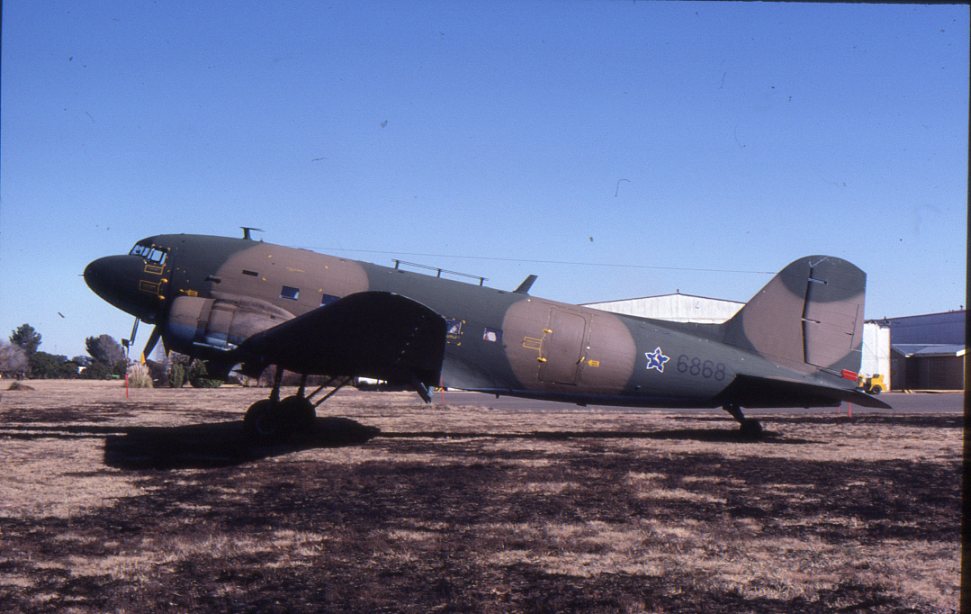
The conversions were carried-out between 1990 and 1995 with early examples being delivered to 35 Squadron at Ysterplaat as from the end of December 1990. 27 and 25 squadrons had been amalgamated with 35 Squadron, previously a Shackleton/ C-47 operation, and their new role combined maritime and transport functions. Other units also operated Turbo Daks on tasks which ranged from navigator/ radio operator training, photo reconnaissance, electronic warfare and medical evacuations/ disaster relief. As the turbo conversions were commissioned, the piston-powered aircraft were gradually phased-out. The total, combined, fleet in 1994 has been quoted as 47 aircraft serving at Ysterplaat, Swartkop and Bloemspruit but, as from September ’94, the last non-turbine aircraft were withdrawn from active service. 1994 was also the year when South Africa held its first universal elections and, from that date, financial rather than political obstructions delayed the replacement of the Turbo Dakota on marine reconnaissance flights. The AMI aircraft had been considered to be a stop-gap option by the SAAF and, by the late 1990s, the government’s Armscor agency was charged with disposing of a large part of the fleet.
A couple of radial-engined C-47s were sold to local companies: 6862 went to Aero Air, 6873 to Aero Scills, both in 1996, while 6821 (rechristened 6888) went to the SAA Museum in 1991 and 6859 went to the SAAF Museum at Swartkop in 1994. A batch of Turbo Dakotas which were considered redundant was auctioned by Armscor and the Dodson group of Rantoul, Kansas, bought nineteen. This included seven which had not had conversion work completed and were moribund in South Africa. Dodson’s aim was to improve the quality of the original conversions to a level which would appeal to civil as well as military operators. Wonderair continued to offer turbine upgrades for C-47s at Wonderboom but Dodson decided to fly eleven airworthy examples to Kansas for upgrading. The seven hulls were eventually transferred to Gert de Klerk’s Freeway airstrip at Kromdrai along with a couple of ex-Zimbabwean Air Force C-47s. Over the years, some of the Dodson Turbine aircraft have returned to Africa to fly with the International Red Cross (6860-2), the Samaritan’s Purse (6868) and Dodsons themselves (6892, once 6849, more recently ZS-OJI in South Africa and YV-2119 in Venezuela).
Elsewhere, the Air Force continued to operate the reduced fleet and 6877, once a radial-engined target-towing ‘Dazzle Dak’ , was seconded to the United Nations Mission to the Democratic Republic of the Congo during unrest during 2006. Having survived the war zone, 6877 became an air show star, appearing at the East London Air Show in June 2007 and Ysterplaat in September 2008. Regularly flying from the Swartkop air base, 6877 suffered damage landing at Mthatha in the Eastern Cape in November 2012 when she ran off the runway during landing.
Maintenance of the turbine Dakotas was outsourced by Armscor to Braddick Specialised Air Services, the company which had evolved from Wonder Air. The maintenance contract expired in 2018 and a new engineering support agreement for the AMI aircraft proved hard to negotiate. Eventually, 35 Squadron had only eight or nine examples, five of which remained operational, three in a maritime role, two as transports. The lack of a maritime reconnaissance replacement kept them flying but, in September 2023, they were reported as being grounded. Coincidentally, the Brazilian aerospace company Embraer demonstrated their C-390-IVR maritime patrol aircraft at the end of 2023. By April 2025, South African interest had expanded and a Memorandum of Understanding was signed between Embraer and the state armaments company Denel. This would potentially lead to an order for six aircraft to replace 28 Squadron’s five-strong fleet of C 130 Hercules which had, in turn, taken-over many of the Turbo Dakota’s tasks. The Turbo Daks haven’t flown since September 2023 and remain hangared at Ysterplaat. It is reported that a lack of updated fire prevention systems keeps them on the ground and, in June 2024, Key Aero reported that the SAAF had decided to permanently retire them.
The last AMI Turbine Dakotas would seem to be too valuable a resource to squander, especially as Basler continue to find a lively market for their BT-67s. Dodson, who had acquired AMI’s Supplemental Type Certificate in 1997, continued with DC-3 conversions until 2016 when they sold the operation to Preferred Air Parts of Ohio. Several ex-SAAF turbine Dakotas continue to fly in the USA over 80 years since they rolled out of Douglas factories, ready to cross the Atlantic to Southern Africa.
Sources:
The majority of the information is from Jennifer Gradidge’s masterful ‘The Douglas DC-1/ DC-2/ DC-3: The First Seventy Years’ published by Air Britain in 2006. The section on the AMI turbine conversions takes much information from the relevant chapter in Volume 3 of this history ( published in 2011 as ‘The Douglas DC-1/ DC-2/ DC-3: 75 years’ ) written by M.D.N.Fisher.
The Dakota Association of South Africa’s site www.dc-3.co.za provided much information as did Ken Fuller’s History of Rand Airport (published on that site).
Tony Merton-Jones article ‘The Safari Line’ in Propliner editions 112-114 furnished information on Tropic/ Meredith operations. Ruud Leeuw’s site added information on Masin Aircraft’s involvement in Dakota sales while the following sites provided military background:
www.saairforce.co.za
www.airhistory.net
https://aerovisuals.ca
www.key.aero
https://medium.com
http://samilitaryhistory.org
https://defenceweb.co.za
https://simpleflying.com
Hits: 64